As the United States marks its 250th anniversary, this episode explores the roles that Jews played in the American Revolution and the new world of opportunity that opened for them afterward. From merchants who financed and supplied the Patriot cause to the first Jew killed in the American Revolutionary War, guest scholars Jonathan Sarna, Michael Hoberman, and Abby Meyer, along with host Jeremy Shere, explore the lives of colonial Jewish communities.
Part 1: Introduction
Jeremy Shere: Late summer, 1790. Newport, Rhode Island. The leader of the Jewish community, Moses Sexias, has received a reply to a letter he’d sent to George Washington, the first president of the United States of America–a newborn nation that only a few years earlier had fought a bloody war to secure its independence from Great Britain.
In his letter, Sexias praised the new government, one which, he wrote, “to bigotry gives no sanction, to persecution no assistance,” and beseeched the President to not merely tolerate America’s Jews but to extend to them the full rights of citizenship.
Washington’s reply echoed Sexias’s words:
“It is now no more that toleration is spoken of, as if it was by the indulgence of one class of people, that another enjoyed the exercise of their inherent natural rights,” Washington wrote. “For happily the Government of the United States, which gives to bigotry no sanction, to persecution no assistance requires only that they who live under its protection should demean themselves as good citizens, in giving it on all occasions their effectual support.”
For Jews, who for centuries had lived as sometimes tolerated, and often not tolerated, outsiders in every society they knew, these were no ordinary words. For the first time, the leader of a nation had addressed them not merely as tolerated guests but as full citizens with equal rights.
But how did this come to be? Did Washington’s words promise a new reality for the Jews of America … or merely offer a new kind of hope?
In this episode, as we celebrate the 250th anniversary of the founding of the United States, we explore the roles that Jews played in the American Revolution, learn about some of the most significant Jewish players in the Revolution, and see how a new world of liberty and opportunity opened for Jews after America established its independence.
Part 2: Before the Revolution
Jeremy Shere: Jews began arriving in the American colonies, in fits and starts, around the mid 1650s. By the 1770s, the Jewish population numbered around 2000 to 2500 people, at most. As Jonathan Sarna, one of the leading historians of American Jewish life, notes Jews lived mostly in port cities.
Jonathan Sarna: From south to North Savannah, Charleston, Philadelphia, New York, Newport. Most of those Jews were merchants of one or another kind. Many of them had ties to the Caribbean and back to Europe.
Jeremy Shere: Michael Hoberman, a professor of American literature at Fitchburg State University, in Massachusetts, says that Jews in the pre-Revolutionary American colonies were a tight knit group and tended to be part of a Jewish community or congregation. He cites as an example a letter written around 1761 by Hannah Lozada, a Jewish widow living in New Jersey, asking for help from an established congregation in New York.
Michael Hoberman: She's writing this letter to the directors at Sherith Israel, which was the oldest Jewish congregation in North America, which was located in Lower Manhattan. And she's writing this letter to them basically asking for their financial help, even though it's, I don't know, 50 miles away from where she lives. She's out there in New Brunswick. There aren't any other Jewish people around. But her first thought when she needs help is to send them a letter
Jeremy Shere: In other words, Jews tended to stick together, as they did and had in Europe, where Jews were not only a minority but often suffered various degrees of persecution, depending on the level of tolerance of the host nation. Jews in the American colonies tended to enjoy more freedom and economic independence and endured less persecution compared to their European counterparts … But their level of acceptance depended on the colony.
Michael Hoberman: They are not granted rights of citizenship in many instances. And in some cases they petition to get those rights and they don't receive them. Because more than one of these colonies has an expectation that in order to receive rights of citizenship, you have to be able to take an oath on the Christian Bible. And Jews won't do that, refuse to do that.
Jeremy Shere: In one well-known instance, Aaron Lopez, a wealthy Jewish merchant, and his Jewish business partner, applied for citizenship rights in Rhode Island in the hopes that it would help their business.
Michael Hoberman: And so they petition for those rights and they're denied more than once by the court in Rhode Island, again, having to do with a prohibition against people who can't take an oath on the Christian Bible.
Jeremy Shere: Lopez was one of the most prominent Jews in the colonies in the pre-revolutionary era. Among his many business ventures, he also was a main supplier of kosher meat for the Jews of Newport. Abby Meyer, an art historian and expert on Jewish art and visual culture, has seen documents showing that Lopez was also involved in importing Passover matzah …
Abby Meyer: A testament to this man's Judaism and orthopraxy, if you will, that he is very much involved in probably the two most strictest items on the Jewish menu, namely Jewish meat and Jewish matzah.
Jeremy Shere: Now, again, the rights and freedoms granted to Jews depended on the colony and changed over time. In New York, sometimes Jews were allowed to vote …
Jonathan Sarna: There were times they didn't allow Jews to vote. Jews I think were much more concerned about their ability to trade because that's what their livelihood depended upon. And where they settled in numbers in those port cities, the tendency was to let them trade, that was good for business and so trade they did.
Jeremy Shere: Jews may not have always been welcomed with open arms or granted full rights, but the idea of Jews, in particular the Israelites of the Hebrew bible, was a source of fascination for ministers and lay leaders..
Michael Hoberman: Particularly in places like Massachusetts early on from the earliest settlement, there is a tendency among the Puritan ministers to put special emphasis on the Hebrew Bible, to accord special meaning to stories from the Hebrew Bible and also to apply lessons from the Hebrew Bible to their daily lives. In particular, as they're trying to create their own religious communities, their own denominations, their own churches, they'll look to the history of the Jews, the history of the Hebrews, as a sort of a model for doing these things.
Jeremy Shere: The fascination with the Hebrew Bible carried on into the 1770s. In the run up to the Declaration of Independence and the Revolutionary War, many patriots took inspiration from the story of the Israelites being freed from bondage in Egypt.
Jonathan Sarna: There are a lot of Protestant ministers who typologize from the Exodus to their own day. So King George is Pharaoh, and they are the Children of Israel. Indeed it's well known that when they first think about a seal of the United States, that Exodus story is deep in their minds. And the idea is that America should have as its model, rebellion to tyrants is obedience to God.
Jeremy Shere: The founders would end up going with a different seal, one featuring an eagle with a banner in its beak reading E Pluribus Unum, out of many, one. But the point is that while there might not have been many Jews in the colonies before the Revolution, the Israelites of the Bible loomed large in the pre-Revolutionary imagination. And despite their small numbers, several Jews would come to play important roles in the struggle for independence.
Part 3: The Revolution
Jeremy Shere: By the time the colonies declared Independence, on July 4, 1776, the War had been underway for more than a year with the first shots fired at the Battles of Lexington and Concord, in Massachusetts, in April 1775. Like non-Jews, Jewish Americans were divided; some were patriots who supported the Revolution, and others were loyalists who continued to support the British Crown. For example, in the early days of the war, when the British captured New York, while patriot Jews fled, loyalists stayed put.
Michael Hoberman: They continued to use the synagogue. I think at some point the British used the synagogue as a field hospital. But it was actually during the conflict itself, during the British occupation there, there was a Hessian soldier who happened to be Jewish, Alexander Zunz, who ends up being the proprietor of the synagogue for a period of time. Newport, Rhode Island is also profoundly divided. I think roughly half of the Jews in Newport were loyalists, and so when the British aren't there, their lives are in danger. And on the other hand, those who were affiliated with the Americans are in danger when the British are there.
Jeremy Shere: As mentioned earlier, many American Jews were merchants, and so on a practical level, according to Sarna, they were concerned that the war would be bad for business. But when forced to choose sides, many sided with the Patriots. And some found the war to be profitable. For example, a Jew named Jonas Phillips came to America as an indentured servant to a fellow Jew, who had paid for his passage. During the war, Phillips made a lot of money smuggling in supplies past British blockades. Scholars know about Phillips from letters he sent to friends and family in Europe.
Jonathan Sarna: He not only talks about the outbreak of the revolution and mentions the Declaration of Independence, and says in Yiddish that he estimates that there are a hundred thousand American shtarkers. There are strong men, tough guys in America, and he thinks they have a chance of defeating the British. And then encloses a copy of the Declaration of Independence. Many printers had published them. Sadly for Jonas Phillips, the letter and the money to his mother never arrived in Amsterdam because it was stopped at St. Lucia. The British got it. They saw a Yiddish letter, they assumed it was apparently a secret code.
Part 4: St. Eustatius
Jeremy Shere: For the most part, Jews did not distinguish themselves primarily as soldiers. They were more important in helping to finance the Patriot cause and supply it with weapons, food, and other provisions. Many American Jewish merchants had relatives and business partners in St. Eustatius, a Dutch-owned island in the Caribbean, near St. Kitts and Nevis, that was one of the busiest free-trade ports in the Atlantic world.
Abby Meyer: So merchants, business people and so forth living in the colonies, Newport, Philadelphia, New York City and so forth, are very much conducting business via the Dutch Indies and this particular island. So the trade is tremendous. There's a lot of allowance for Jewish people to conduct business and so forth, enough so that people are actually setting up shop and setting up a community there as well.
Jeremy Shere: This is Abby Meyer again.
Abby Meyer: We have a Jewish cemetery, we have a synagogue there, a mikvah, so the ritual bath, which really speaks to day-to-day Jewish life.
Jeremy Shere: Jews made up around 30% of the island’s population. Most had migrated from the Sephardic Jewish community in Amsterdam. And when the Revolutionary War began, they shared the Dutch government’s sympathy for the Patriot cause.
Jonathan Sarna: And the Dutch were quite happy to help these revolutionary Americans against the British. The Dutch and the British had fought several wars. And so if you were trying to get around the British blockade, St. Eustatius was the way to do that. And more than we realize, that made Jews significant.
Jeremy Shere: The merchants and privateers of St. Eustatius, Jews included, had practical reasons to support the Patriots.
Jonathan Sarna: There's little doubt that there were Jews whose lifeblood of trade had been restricted by the outbreak of the war, and who turned to the effort to assist George Washington's army. They were smuggling arms and other kinds of goods, especially to Philadelphia, and that was very important.
Jeremy Shere: Britain was well aware of the smuggling activity, and in 1781, sent naval commander George Rodney to stop it.
Abby Meyer: And Rodney, in a military takeover, assumes the position of governing St. Eustatius. Unfortunately, he brings with him a tremendous amount of antisemitism and actual Jew hatred.
Jeremy Shere: Rodney went on what we might call an antisemitic rampage. He arrested the island’s Jewish menand locked them in a warehouse …
Abby Meyer: He has his team dig up the cemetery looking for Jewish objects, loot, money, and so forth. I mean, just completely, just out of control.
Jonathan Sarna: St. Eustatius never really recovered and has far fewer people today than it had been. It never recovered from that invasion. But Admiral Rodney is very clear that he's going to Eustatius, because in his view, had it not been for the trade through St. Eustatius, the colonies would long since have fallen.
Jeremy Shere: The irony is that Rodney’s focus on St. Eustatius, especially his vendetta against the island’s Jewish merchants and privateers, led to him taking his eye off the French fleet, which the British blockade had kept from supplying the Patriots.
Jonathan Sarna: The French ships slipped past him, and that would be the navy that would lead to the British defeat eventually and force surrender.
Part 5: Francis Salvador
Jeremy Shere: Some Jews DID actually fight in the war … The first known Jew to die fighting for the American cause was Francis Salvador, a Sephardic Jew born into a wealthy Jewish family in London. In the late 1760s, the family purchased land in South Carolina, and Salvador arrived in 1773 to develop it. He was elected to the South Carolina Provincial Congress in 1774, making him one of the first Jews–maybe THE first–to hold significant elected office in colonial America. He strongly supported independence from Britain and joined a militia to protect Patriot settlements against a combined force of Loyalists and Cherokee warriors.
Michael Hoberman: And the group is ambushed and Salvador is killed in this ambush. From that point on, he becomes larger than life. There are markers in various parts of South Carolina to his memory. If you go to the historic synagogue in Charleston, they have a very large and impressive diorama that replicates the scene of his martyrdom. And he goes down in history as the first Jew to be killed in the American Revolution.
Part 6: Gershom Sexias
Jeremy Shere: But, again, Jews mostly contributed to the Revolution not as soldiers but as merchants and community leaders. At the beginning of this episode I mentioned Moses Sexias and his letter to George Washington, after the war. During the war, Moses’s brother, Gershom, a half Ashkenazi, half Sephardi Jew, played a crucial role in leading the Jewish community of New York.
Jonathan Sarna: He must have been a very remarkable man because he is respected, first of all, by both groups of Jews and also by non-Jews. It's interesting that he, for non-Jews is called Reverend Sexias, meaning they are elevating him to the status and treating him like one of the ministers. And it's quite clear that he dressed the part, he wore a collar and so on. So here we have a Jew who's treated like a local minister.
Jeremy Shere: Sexias was technically not a rabbi, at least not by today’s standards. He certainly wasn’t nearly as learned as the great European rabbis. But he had a working knowledge of the Torah and the standard liturgy, which was enough to get him chosen as the lay leader of Sherith Israel, the oldest synagogue in the colonies, located in lower Manhattan. When the British invaded New York in the summer of 1776, Sexias had a choice to make.
Michael Hoberman: He has to decide whether to stay in New York, it's not as though the British are gonna burn the synagogue down, right? The British don't have it in for the Jews anymore than they have it in for anyone else. But Sexias had, by this time, developed some affinity, an admiration for the people who were rebelling against Great Britain. And so he decides in the face of this invasion to leave New York and to take the Torah scrolls with him.
Jeremy Shere: Sexias and his family and many members of the Jewish community made their way to Philadelphia, where they re-established the congregation. After the war, Sexias returned to New York and reclaimed his position as the congregational leader.
Michael Hoberman: Eventually into the 1780s or nineties, he's named the first Jewish trustee of Columbia College. He has very active relationships with non-Jews. He's a very learned person. And also eventually, he develops a sort of a political ideology, which is very much in keeping with republicanism. There's some of his sermons that one can find where he will talk politics, not so much telling people who to vote for, but rejoicing in the freedom of America, celebrating the successful conclusion of the American Revolution, celebrating the triumphs of people like George Washington.
Part 7: Hayim Solomon
Jeremy Shere: One of the most prominent and important American Jews during the Revolution was the merchant and broker Hayim Solomon, a Polish Jew who arrived in the American colonies in the 1770s. Among Jews of note, Solomon is easily the most mythologized. He’s sometimes referred to as the “financier of the Revolution.,” which is a bit of an overstatement. But while Solomon may not have been THE financier of the Revolution, he did play a crucial role in helping to finance the Revolution, using his financial expertise to raise money to supply Washington’s army. He also loaned money to individuals, including future president James Madison.
Jonathan Sarna: He's not so extraordinary until the revolution, but then his skills become extremely important. It is also apparently the case that he's rather ardent in his support of the patriotic cause. And he knew languages so he could pass along what some of these German speaking troops, Hessians, were doing.
Jeremy Shere: Solomon first set up shop in New York. When the war began and the British captured the city, Solomon escaped to Philadelphia, where he re-established his business.
Jonathan Sarna: And he offers his knowledge and services to Robert Morris, the Secretary Treasury. It's rather interesting to read Robert Morris's papers in the early pages. “The Jew, Hayim Solomon is coming later.” And you learn how he came to value Hayim Solomon.
Jeremy Shere: Solomon raised money for the United States by using his own accounts to sell U.S. debt certificates–not an easy task given that the United States was fighting for its existence and that the government was often broke. He took a modest percentage for his services and gave the rest of the proceeds to the Continental Congress. He was also instrumental in calculating exchange rates between currencies from various states and foreign countries.
Jonathan Sarna: If you came from Virginia with Virginia money, you needed a Hayim Solomon to work in Philadelphia with Pennsylvania money. And to trade your Virginia money.
Jeremy Shere: Perhaps Solomon’s greatest contribution was using his expertise in converting foreign loans and bills of exchange into usable cash to help bankroll the Yorktown campaign, where Washington’s army defeated Britain’s General Cornwallis, effectively ending the war. After the war, Solomon was a leading voice in the Philadelphia Jewish community, defending Jews against accusations of disloyalty leveled by rival businessman.
Michael Hoberman: Meyers Fisher. The name sounds Jewish, but he is not Jewish. He issues this screed in the Philadelphia newspaper, accusing Solomon and other quote, Jew brokers of being, all of the, the similar the familiar canards, not really loyal to the United States, just in it for himself. Just trying to get rich. Only cares about his fellow Jews.
Jeremy Shere: Solomon hit back, publishing a letter in the newspaper defending his honor …
Michael Hoberman: But also fortifying his claims to dignity with the fact of his loyalty to the Revolutionary War and other Jews who served the Revolutionary War. So here's Solomon offering an example of how and why Jewish participation and loyalties with the revolution was something that they could and did parlay in the aftermath of the revolution when the country is still profoundly divided between Federalists and anti-Federalists and pro French and pro British people and so on. And Solomon does not hesitate to jump right into that fray and identify himself very strongly as somebody who served the revolution.
Jeremy Shere: Solomon’s story culminates in tragedy. He died soon after the end of the war, in 1785, at the age of 44. The cause was most likely tuberculosis. And because most of the money he lent to the Continental Congress and to individual members was never repaid, he left his wife and children in debt, to the point that Solomon’s wife, Rachel, had to petition the government for financial relief.
Part 8: Mordechai Sheftall
Jeremy Shere: The highest ranking Jew in the Revolutionary army was Mordechai Sheftall. Born in Savannah, Georgia, Sheftall was a successful merchant and a leader of Savannah’s small Jewish community. He was also deeply involved in local civic affairs–he held public office, served as a justice of the peace, and rubbed shoulders with Georgia’s political elite, which was unusual for Jews at the time. In the run-up to the war, Sheftall and his family were strong supporters of the Patriot cause. When the war began, he served as the Commissary General for Georgia troops, making sure soldiers were supplied with food, weapons, uniforms, horses, and provisions. When the British invaded Savannah, Sheftall and his son were captured and held on a prison ship.
Jonathan Sarna: A few years ago they brought up a boat that had sunk off Savannah. And on that boat was a diary of a Protestant minister named Michael Allen. And in his diary, he reported that he was a prisoner along with “the Jew,” Mordecai Sheftall.
Jeremy Shere: Allen describes how the British fed the prisoners pork, and that Sheftall adamantly refused, which angered his captors.
Jonathan Sarna: The British took his knife and fork and greased it with lard as a punishment, and Alan said it strengthened him to see the ardor with which Sheftall observed his faith. And that's interesting. First of all, we see really the British using what we would call antisemitic punishment there, singling out a Jew. And we learn that the Sheftalls, like a lot of Jews at that time, were scrupulous and especially them not eating pork products. That was a Jewish identifier.
Jeremy Shere: Sheftall’s wife, meanwhile, wrote letters to her husband and son, and did what she could to assist.
Michael Hoberman: And her letters attest to her feeling helpless–she would like to help her husband and son, she would like to send food to them, but she can't because she's under siege. And she describes one situation where you couldn't go outside because there were shells, they were shelling the town. She ends up evacuating to Charleston and then Charleston is put under siege by the British.
Jeremy Shere: Sheftall was eventually released and continued to support the Revolution. After the war, he returned to Georgia and tried to rebuild his business and recover losses from wartime destruction. Some of Sheftall’s descendants are still in Savannah to this day.
Jonathan Sarna: When I was there, I met Jewish members of the family, non-Jewish members of the family, but they were all very proud to go back and they preserved all sorts of Revolutionary-era objects in their home. They showed them to me, this hat and this bullet, and so on. They wanted people to know of their exploits in the American revolution.
Part 9: The Aftermath
Jeremy Shere: In the aftermath of the war, colonial Jews had reason to be cautiously optimistic about their place in the newly born United States. As we’ve seen, George Washington himself responded to Moses Sexias’s letter with language suggesting that Jews would not be merely tolerated but granted full rights of citizenship. But in practice, depending on the state, it took time for Jews to actually gain equal rights. For example, in Maryland, it wasn’t until 1826 that Jews were allowed to run for public office.
Michael Hoberman: They actually have something called a Jew bill, which is hotly contested but then passes the legislature in 1826. Jews cannot run for office in New Hampshire until maybe the 1870s.
Jeremy Shere: As Sarna notes, there’s evidence that Thomas Jefferson’s soaring words about “life, liberty, and the pursuit of happiness” in the Declaration of Independence included religious liberty, for Jews and others.
Jonathan Sarna: We certainly know that there were founders who consciously included Jews there, which is why when Mikvah Israel, which has so many Jews, they need a new place to worship and they take out a loan, but then the war ends and a lot of those Jews leave. So Mikvah Israel is in financial trouble. And what's fascinating is that there were non-Jews, including Benjamin Franklin, who are on the list of those who donate to Mikvah Israel. Something that I'm not sure would earlier have happened, but now seems to be part of the new ethos.
Jeremy Shere: Sarna also points out that while Jews made noteworthy contributions to the Patriot cause, even more significant was the impact that the Revolution and American values had on how Jews conducted their communal affairs. Before the Revolution, Jews were compelled to join synagogues, and synagogue leaders had power over the people in their congregations, publicly calling out and shaming members for violating kosher laws, for example. But after the war, synagogue membership became mostly voluntary .
Jonathan Sarna: We're going to eventually see Jews secede him from synagogues in the 1820s. And they’re going to justify that secession on the basis of American values. The same B’nai Jeshurun, which still exists, was a breakaway. And if one looks at the document, those are American values that have been internalized by local Jews, and they feel they have that right to be free and to establish something new.
Jeremy Shere: This new dawning of religious freedom was part of what made America so attractive in the eyes of many European Jews. In Eastern Europe, especially, rabbis had considerable power over Jewish communities. The American model offered a new way to live.
Jonathan Sarna: Although the rabbis thought that was terrible, it's perfectly clear that there were plenty of Jews who were perfectly happy to come to America and be free of rabbinic rule. And it took a while before Rabbis learned, oh we can't force Jews. We have to persuade them. We have to offer them things that will lead them to want to come into our congregations. But the state is not going to back us up if we say, oh, this guy is rebellious against the synagogue, they'll say, yeah in a Protestant country, there are all sorts of rebellious people. America was founded by rebellious people. You're in the wrong place if you think we're gonna lock up rebels.
Jeremy Shere: Fast forwarding to today, 250 years after America proclaimed independence, for Jews, it’s fascinating, and important, to look back at how Jewish life and community in the United States began. Even though most American Jews don’t trace their roots back to those early colonial Jewish communities, we’re all beneficiaries of what they established.
Michael Hoberman: I would say that despite the fact that the genealogy may not connect most American Jews to this history the actual developments that came out of it, the cultural institutions, the laws, the the practices, the congregational practices, all of these things derive from that watershed experience. And whether or not you have family roots ofJewish families who came here in the 1700s, you were still connected to this history.
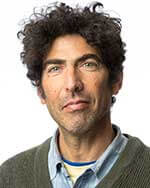
Michael Hoberman
Michael Hoberman is a professor of American literature at Fitchburg State University and an adjunct professor of history at Yeshiva University. His books include New Israel/New England: Jews and Puritans in Early America (University of Massachusetts Press, 2011) and, most recently, Imagining Early American Jews (Oxford University Press, 2025). Hoberman has published widely both in academic journals and in more mainstream venues, and he lectures frequently for both popular and academic audiences. His current book, The John Muir Trail's Jewish Founder: The Uplifted World of Theodore Solomons, tells the largely unknown story of an important Jewish American outdoorsman and conservationist, and will be published in 2027 by the University of California Press.
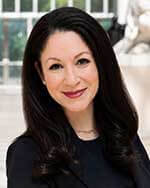
Abigail H. Meyer
Abigail H. Meyer is an art historian and curator specializing in Jewish ritual objects, visual arts, and material culture with experience in collection management, interpretation, connoisseurship, and provenance research. She is the Consulting Curator for the Weitzman National Museum of American Jewish History and Collections Research Specialist at the National 9/11 Memorial & Museum and previously the Head of the Department of Ceremonial Objects & Fine Art at Kestenbaum & Company and the Researcher for Judaica at the Metropolitan Museum of Art in the Department of European Sculpture and Decorative Arts. Meyer consults for museums, universities, libraries, and private collectors on rare Hebrew books, illuminated manuscripts, ritual objects, fine art, and cultural heritage. Her research focuses on the intersection of Jewish history, cultural anthropology, museum studies, and art history.
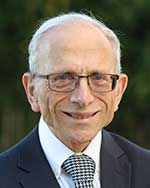
Jonathan D. Sarna
Jonathan D. Sarna is University Professor and the Joseph H. & Belle R. Braun Professor of American Jewish History (emeritus) at Brandeis University. He also is the past president of the Association for Jewish Studies and Chief Historian of the Weitzman National Museum of American Jewish History in Philadelphia. Author or editor of more than thirty books on American Jewish history and life, his American Judaism: A History, now in its second edition, won six awards including the 2004 “Everett Jewish Book of the Year Award” from the Jewish Book Council. Sarna is a fellow both of the American Academy of Arts and Sciences and of the American Academy of Jewish Research, and he holds five honorary degrees. His most recent books are Coming to Terms with America, a volume of essays now translated into Hebrew under the title Zehuyot Bemifgash (Mercaz Shazar); and Yearning to Breathe Free: Jews in Gilded Age America, coedited with Adam Mendelsohn.
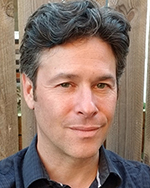
Jeremy Shere, PhD
Jeremy Shere, PhD, is a podcast producer based in Bloomington, Indiana. Jeremy earned his doctorate in English Literature and Jewish Studies from Indiana University. He is currently the producer of the Frankely Judaic podcast for the Jewish Studies program at the University of Michigan.
Executive Producer: Warren Hoffman, PhD
Producers: Avishay Artsy, Erin Phillips, and Jeremy Shere