In this episode, scholars and translators discuss Yiddish popular fiction known as “shund,” serialized in Yiddish newspapers around the turn of the 20th century, and consider the gap between this popular, commercial literature and literary
fiction. Guest scholars include Jessica Kirzane, Eddy Portnoy, Mikhl Yashinsky, and Saul Noam Zaritt with host Avishay Artsy.
Transcript
SCORING IN <Dan Lebowitz - Tiptoe Out the Back>
Avishay Artsy: Welcome to Adventures in Jewish Studies, the podcast of the Association for Jewish Studies. In every episode, we take you on an entertaining and intellectual journey about Jewish life, history and culture, with the help of some of the world’s leading Jewish studies scholars. I’m your host for this episode, Avishay Artsy.
If someone were to ask you to name an example of Yiddish literature, you might pull a blank, or at best you might mention Tevye, the scripture-quoting milkman, and his wife Golde and their daughters, who lived in a small village in Tsarist Russia. These characters became the inspiration and source material for the 1964 musical Fiddler on the Roof, but before that they existed in Tevye the Dairyman, the 1894 short story by Sholem Aleichem.
He’s among the best-known Yiddish writers now… but in his time, he struggled to find readers. The actual bestselling Yiddish author of the nineteenth century was a man named Shomer who is virtually unknown to readers today, despite the fact that he wrote 200 books in the span of 25 years.
Saul Noam Zaritt: He was the person that people wanted to read, as much as it bothered and really angered Sholem Aleichem, his main rival.
Avishay Artsy: This is Saul Noam Zaritt. He’s an assistant professor of Yiddish and Ashkenazi culture at Ohio State University.
Saul Noam Zaritt: One of the main projects of Sholem Aleichem was like, no, Yiddish is a proper language and we're going to sort of bring Yiddish into its proper place in the family of languages and family of nations.
Avishay Artsy: Sholem Aleichem worked through his arguments in an 1888 pamphlet called “The Trial of Shomer.” In it, a judge finds Shomer guilty of peddling trashy literature that’s derivative and that corrupts the taste of the Yiddish-reading public.
Saul Noam Zaritt: Shomer responded with his own long screed, but it just wasn't as elegantly written and no one bought it. And so he was facing so much anguish around this sort of very harsh criticism, almost sort of excommunication by Sholem Aleichem, that he ended up fleeing to the United States.
Avishay Artsy: This intense rivalry between these two writers captures two distinct Yiddish literary movements.
On the one hand, literary fiction, like that of Sholem Aleichem and Isaac Bashevis Singer, that sought to reflect the highest intellectual standards of the Jewish people.
On the other hand, sensationalist stories of adventure, mystery, romance, and crime that the masses consumed and critics fought against.
In this episode of Adventures in Jewish Studies, scholars and translators discuss the pulp fiction that Sholem Aleichem and others derided… and ask if the gap between the two genres may be as fictitious as the stories they sought to tell.
SCORING OUT
Avishay Artsy: Reading Yiddish fiction opens up an entire lost world of Jewish life and culture. These stories, even in translation, capture the beliefs and concerns of Jews who inhabited Eastern European shtetls and New York City tenements.
Eddy Portnoy: You know, Yiddish is this thousand-year-old language that Jews began speaking in Europe, you know, around the ninth, tenth century. And their full folklore and culture came to exist in this language.
Avishay Artsy: Eddy Portnoy is the academic advisor and the director of exhibitions at the YIVO Institute for Jewish Research.
Eddy Portnoy: I'm also the author of “Bad Rabbi and Other Strange but True Stories from the Yiddish Press,” which is sort of an anthology of unusual stories about Jews from Warsaw, New York, during the late 19th and early 20th centuries.
Avishay Artsy: Portnoy’s scholarship is less focused on the main characters of standard Jewish historiography… the great rabbis, business leaders, politicians, and artists. He wanted to understand how the everyday, not-famous-at-all Jews lived their lives.
Eddy Portnoy: And because people don't write about Jews like that, what I was able to discover was that a lot of their stories were available in old Yiddish newspapers.
Avishay Artsy: Portnoy has been a contemporary contributor to The Forward, a news site that was originally founded in 1897 as a Yiddish-language daily socialist newspaper. He combed through Yiddish newspapers for colorful stories to fill a weekly column called “Forward Looking Back.”
Eddy Portnoy: And found really incredibly fascinating stories about Jewish criminals, all kinds of violent activity, Jewish psychics, all kinds of things that don't get written about in history books.
SCORING IN <Sir Cubworth - Party Waltz>
Avishay Artsy: These stories amount to a world that Portnoy calls “Yiddishland” – the culture that Ashkenazi Jews brought with them as they immigrated from, or were expelled from, Eastern Europe. From the 1880s to the mid-1920s, about two and a half million Jews moved to the U.S. Around three-quarters of them went to New York. There, a local Yiddish culture flourished.
Eddy Portnoy: There were, by the 1920s, five daily newspapers in Yiddish, dozens and dozens of weekly and monthly magazines, a dozen Yiddish theaters in Manhattan alone, with more in Brooklyn and the Bronx.
Avishay Artsy: These newspapers carried news… but that’s not why people read them.
Saul Noam Zaritt: News they would likely get from the imperial languages, Polish, English, Russian, of course, German, or wherever else they were getting their news.
Avishay Artsy: People bought these Yiddish newspapers to read the serialized novels, stories and poems.
Eddy Portnoy: And one of the forms of literature that is extremely popular is this kind of low quality sensationalistic pulp literature that critics despise, but that readers love.
Avishay Artsy: The newspaper editors did publish high-quality literature… translations of Tolstoy and Dostoevsky, for example. Editors would also loosely adapt books from other languages into Yiddish.
Eddy Portnoy: But they also realized that readers love trashy literature and they included that as well.
Avishay Artsy: These kinds of sex and violence-filled stories became popular in the late 1800s with the advent of dime novels made possible by cheap printing, Zaritt says.
Saul Noam Zaritt: German readers were really into like Western novels, novels of the Wild West, but of everything that came under those genres – mystery novels, adventure novels, all of them serialized in pamphlet form – those became really huge in Germany, and German intellectuals really hated it.
Avishay Artsy: These critics dismissed these books both for the cheapness of the paper and the writing contained therein, and named it “shund.”
Saul Noam Zaritt: Shund means trash, it also means dross, or the leftover of when you skin an animal, that kind of trash, that sort of useless part of the animal.
Avishay Artsy: The term caught on among high-minded Jewish socialists in the 1880s and 1890s, particularly those who lived on New York’s Lower East Side.
SCORING OUT
Avishay Artsy: Coming off the end of the Jewish Enlightenment, they wanted to inspire workers towards self-improvement… and just as Sholem Aleichem did, they saw “shund” as crass and degrading.
Eddy Portnoy: The bulk of intellectuals felt that this phenomenon that's called shund in Yiddish, was sort of a negative valence in Yiddish culture.
Avishay Artsy: But dividing Yiddish literature between high and low brow, or canonical and non-canonical, isn’t so easy.
Saul Noam Zaritt: Yiddish literature is not a book culture, especially once newspapers took over the scene, especially the beginning of the 20th century. You're reading most of your literature and your writers are making their money and their livelihood not from the books that they write, or the poems that they put in small poetry books or in small literary journals. They're making most of their money in serializing their novels and other kinds of stories in the Yiddish press. So there hardly is anything like Yiddish literature without its mass production.
Avishay Artsy: Part of the reason for that was simply economic.
Eddy Portnoy: I would say the majority of Yiddish-speaking Jews were poor and couldn't afford to buy books. Obviously they would read them at libraries. That was very common. But most Jews did their reading in newspapers. And that's one of the reasons that newspapers published so much literature.
Avishay Artsy: The practice of serializing novels was hardly unique to Yiddish. Mark Twain, Henry James, and Herman Melville did it. Uncle Tom's Cabin, The Three Musketeers, The Count of Monte Cristo, Anna Karenina, The Brothers Karamazov… all appeared first in serialized form.
Saul Noam Zaritt: Dickens, all novels in the 19th and early 20th century are publishing in serialization. No one is publishing a book straight out. And the book itself, or the novel as a genre, is a genre that is very weird. It's not just immediately some kind of higher object. It's actually popular literature, first and foremost, and becomes stratified between its different modes and different audiences much later.
SCORING IN <The Great North Sound Society - Jesse's Carnival Waltz>
Avishay Artsy: Isaac Bashevis Singer, the Nobel Prize-winning author and probably the best known Yiddish writer, loved reading “shund” as a child. He was around ten or eleven when he first read the Sherlock Holmes stories of Arthur Conan Doyle. Those stories were so popular that they inspired similar detective stories in other languages, including Yiddish. Singer recalled in his memoirs that he loved the adventure stories of Max Spitzkopf, a Yiddish-speaking detective in Vienna who solved crimes for Jewish patrons. Singer wrote, “In my eyes, these detective stories were high art. They simply enchanted me.”
Eddy Portnoy: I mean, the stories were so popular that, you know, there were newspapers in New York that simply stole them and republished them under fake names.
Avishay Artsy: Mikhl Yashinsky, a Yiddish teacher and performer, encountered the stories during a fellowship at the Yiddish Book Center.
Mikhl Yashinsky: They're thrilling stories, they're suspenseful, and they're very pulpy. They're very much in this genre of shund, of Yiddish pulp fiction.
Avishay Artsy: After he translated a few of them, the center commissioned him to translate all 15 existing Max Spitzkopf stories in one volume, which was recently published. The stories follow Spitzkopf and his trusty assistant Hermann Fuchs, the Robin to Spitzkopf’s Batman, as they solve crimes. And the sorts of cases they get involved in are not the typical Sherlock Holmesian cases.
Mikhl Yashinsky: They're distinctly Jewish cases, so blood libel and women being kidnapped from the shtetl and forcibly converted, or being kidnapped from the shtetl and sold into sexual slavery in Constantinople, which was also going on at the time. Or there's a story, The Spy, Der Spion, which is based on the Dreyfus affair, which had only taken place just a few years before, and pogrom, and every time Spitzkopf runs in to save the day.
SCORING OUT
Avishay Artsy: The Spitzkopf stories tell us about the anxieties of Jews at the time, Zaritt says.
Saul Noam Zaritt: This is an interesting case of really extreme Judaization of the Sherlock Holmes figure, right? He's saving the Jewish people from forced conversion or whatever. Jewish history is involved and he is Jewish and his Jewishness is really emphasized.
Avishay Artsy: They're also just very fun stories. And unlike serialized novels, these were sold at newsstands as 32-page pamphlets.
Mikhl Yashinsky: That was a real draw, because people were used to getting these stories, maybe they had to wait every week in the newspaper for the next installment to come out. These were published as little slim novelettes that contained a full Spitzkopf story, from discovery of the crime to capture of the villains, and their arrest, and being brought to justice, and Spitzkopf being rewarded.
Avishay Artsy: The stories were written by Jonas Kreppel, an Austrian-Jewish intellectual who worked as a newspaper editor.
Mikhl Yashinsky: Kreppel's name never appeared on the Spitzkopf stories. They were published anonymously, and on the back of every story it said, “each of these stories is the complete truth. Spitzkopf really lived and breathed, and these are the true accounts of his deeds,” which, I think that's just ad copy, but I think maybe it lent some credence of truth for there not even to be an author listed. And maybe he was also not wanting to be associated with such pulpy stories, because he, in addition to being a writer and publisher of these sensation novels, was also a very serious author.
Avishay Artsy: Kreppel had a lot of jobs. He was a press officer for the foreign ministry in Vienna. He edited a German-language newspaper called Jewish Correspondence.
Mikhl Yashinsky: He wrote a over 800-page book called “Juden und Judentum von Heute,” Jews and Judaism of Today, that is a sort of encyclopedic text.
Avishay Artsy: Aside from the serious stuff, he wrote the Spitzkopf stories and other crime pamphlets.
Mikhl Yashinsky: And they have fun names. One is “Der Edem a Merder,” My Son-in-Law's a Murderer, and other things like that, all kind of in this pulpy vein.
Avishay Artsy: Kreppel published Hasidic legends and a collection of Jewish jokes.
Eddy Portnoy: Kreppel also published a magazine called Yiddishe Illustrated Zeitung, which means Jewish Illustrated Newspaper. And it was this weekly published in Krakow that had all kinds of sensationalistic stories and images. There aren't many copies that have survived, but the ones that I've seen, you know, have things like on the cover where there's like a rabbi getting run over by a train. There's a guy getting shot in the head.
Avishay Artsy: The Spitzkopf stories also came with racy covers. Yashinsky described the cover of The Flesh Peddler, in which a girl is sold into sexual slavery in Constantinople.
Mikhl Yashinsky: The cover is almost always Spitzkopf apprehending the criminals. So in this one he is, and the criminal is this woman who's the proprietress of a brothel who's holding a whip and is about to bring it down on the half-naked body of this girl. And she's lying there with her breast exposed.
SCORING IN <Doug Maxwell - Solo Cello Passion>
Avishay Artsy: You can understand why Sholem Aleichem and other intellectuals looked down on shund. You can also see why the masses bought these pamphlets and read them excitedly. I asked Yashinsky to read me part of a Spitzkopf story. He picked a section from “Kidnapped for Conversion.” As these stories usually go, Spitzkopf arrives on the scene and catches the villains red-handed.
Mikhl Yashinsky: [reading in Yiddish]
Avishay Artsy: “Look after the horses!” Spitzkopf shouted, leaping off his own with the greatest of speed and sprinting to the gate of the Felician Sisters’ convent. He barely had time to whip out his revolver before the infamous carriage approached.
“Halt, you rogues!” Spitzkopf commanded. “One move and I’ll shoot!”
Quick as lightning he flung open the carriage door and illuminated the interior with his electric torch. Inside were the priest, that young bearded fellow we know only too well, and the nun, with an unconscious girl, wrapped in a large rough blanket, lying in her lap.
“Ha, you villains!” he bellowed. “I’ve caught you red-handed. I am the detective Max Spitzkopf, and you are all under arrest.”
SCORING OUT
Avishay Artsy: Unlike the Sherlock Holmes who-done-its, these are how-done-its, with the identity of the villain being clear from the start. The thrill is in watching the detective in action and seeing the story play out.
Mikhl Yashinsky: And I think that might have something to do with perhaps that was what the Jewish populace, suffering from some of these crimes and reading about this persecution and experiencing it, not wanting to be kept in suspense about if the criminals would come to justice. They're told who they are and perhaps that was a sort of comfort to them.
Avishay Artsy: Kreppel knew that his readers encountered hatred and bigotry, and that they would want to see villains brought to justice. Kreppel himself couldn’t escape antisemitic hatred. In the mid-1930s, Kreppel wrote to warn Austrians about the growing Nazi threat. He was among the first waves of people sent to concentration camps, along with other political prisoners. He was sent first to Dachau, and then to Buchenwald, where he was murdered.
Eddy Portnoy: I'm really glad that this book got published, because it brings this Yoina Kreppel or Jonas Kreppel into the public eye in a way that he hadn't been previously. And, you know, he is, I think, a much more important figure in Yiddish journalism and literature than people had previously imagined.
SCORING IN <Abe Schwartz - Mechutonim Tantz>
Avishay Artsy: While most of these writers were men, women also held an important place in the Yiddish journalism and literary scene.
In order to sell newspapers, editors quickly realized that they needed to appeal to female readers.
Jessica Kirzane: Newspapers used the fact that they had women writers as a selling point because of the assumption that the person who was making decisions about household economics and spending decisions was often the woman.
Avishay Artsy: Jessica Kirzane is the associate instructional professor of Yiddish at the University of Chicago. She’s also the editor-in-chief of In geveb, a Journal of Yiddish Studies.
Jessica Kirzane: Often, when they had a woman writer, and often it was one or two women writers, they would publish pictures of the faces of those women to prove, like, “look, we have a real live woman writing for us!”
Avishay Artsy: These sections offered a platform for Yiddish female writers to explore topics of particular interest to their female readers.
Saul Noam Zaritt: And so you have figures that come to be stars of the women's sections of these newspapers that people would turn to for advice, for news of various kinds related to women, or on the back page, you might have splashy advertisements for vaudeville stars and various whatever scandals are going on. But then also you'd have a novel for women on the back page.
SCORING OUT
Avishay Artsy: Out of these women’s sections came writers like Sarah B. Smith. A Hungarian immigrant, Smith worked in sweatshops before writing about the lives of factory workers for the Yiddish daily paper Der Tog, or The Day, and writing a couple dozen novels.
Another writer, Miriam Karpilove, wrote short stories and serialized novels in the Yiddish press that addressed gender roles and sexual liberation.
Jessica Kirzane: Miriam Karpilove was a prolific writer of Yiddish literature. She was born in 1888 outside of Minsk in what is now Belarus, was then in the Russian Empire, and she died in 1956. And when she came to the U.S. almost right away as a fairly young woman she was writing quite a lot. And she never married. She supported herself financially as a writer, writing in the Yiddish press, writing short stories, reportage, she also wrote jokes and aphorisms for the Yiddish newspaper, so kind of a jack-of-all-trades, but her meat and potatoes was serialized novels.
Avishay Artsy: Reading these serialized novels, Kirzane was surprised at just how modern and amusing the writing felt.
Jessica Kirzane: The thing that really jumped out for me about her right from the beginning was that she's very funny. She's very sarcastic, very ironic, making fun of the Yiddish literary establishment that she's writing for and doesn't hold any punches and I think that is her appeal, that she's rolling her eyes along with her readers at the world that they're living in and through, which is something that I found very refreshing and relatable.
Avishay Artsy: Karpilove used that sarcastic, ironic attitude to talk about the role of women in society. She wrote about sexual consent and bodily autonomy. At first Kirzane felt like Karpilove’s writing was ahead of her time.
Jessica Kirzane: And then the more that I read, the more I realized that she wasn't so ahead of her time, that she was very much writing within her time. There were a lot of writers who were writing in this vein, writing this kind of ironic middle-brow discourse, men and women, and that there were a lot of women who were writing toward something that we might now call feminism, and that I just didn't know about it until then.
Avishay Artsy: Kirzane describes Karpilove as a writer of middle-brow fiction. This has been a contentious term in literary studies, because, like “shund,” it suggests the writing is less valuable and therefore less worthy of being read. But middle-brow fiction serves an important role, she says, of mediating between highbrow literary culture and popular literature…
Jessica Kirzane: …and helps to kind of explain both types of literature to one another, so authors that reference and explain and even poke fun at the literary establishment, and then by doing that give access for more popular readers to that world and the vocabulary of that world and some of its concepts and concerns, and I think that is something that Karpilove really is doing. She talks about, she writes about philosophy and the world of ideas, but she does it through plots that have to do with romance or sexual tension or things that maybe are a little bit more attractive for a popular reader, and she does it in ways that offer clues and explainers and doesn't assume prior knowledge.
SCORING IN <Original Dixieland Jazz-Band - Palesteena, 1920>
Avishay Artsy: Kirzane translated Karpilove’s novel “Diary of a Lonely Girl, Or The Battle Against Free Love.” It first appeared in serialized form in a newspaper called Die Wahrheit, The Truth, and then shortly after was published in book form in 1918. “Diary of a Lonely Girl” follows an unnamed narrator who writes in first-person diaristic entries. She’s a young, Yiddish-speaking immigrant looking for love.
Jessica Kirzane: So she's dating men. Some of them are married. Some of them are single, and as she's dating one man after the other, they are more or less interchangeable in that they are all horrible to her.
Avishay Artsy: The men are all interested in having sex without offering the prospect of marriage. Meanwhile, the narrator lives in rented rooms from landladies who are invested in the respectability of the homes they are renting.
Jessica Kirzane: There's one in particular who comes to, like, check on and water her plant whenever the narrator has a man in her room in this, like, not very subtle kind of policing way, and some of it is because they're sort of, like, older and have different social mores, but also there's this very real worry that their home will be seen as a home of prostitution and that there could be legal repercussions as well as sort of, like, social repercussions for them for letting their room out to this sort of a bad element.
Avishay Artsy: So the narrator of Karpilove’s book is caught between the men who want to have sex with her and the landladies who would find it scandalous and would kick her out of the house.
Jessica Kirzane: And so she's very, very precarious. She has so little power, but the one power that she does have is that she's extraordinarily witty and clever, and she can kind of put off both her landladies and her suitors through kind of, like, her verbal power and her intellect.
SCORING OUT
Avishay Artsy: Kirzane was translating the book just as the #MeToo movement was in full swing, and she felt that the novel’s themes of sexual consent and the repercussions of resisting men’s advances were relevant to contemporary concerns.
Jessica Kirzane: It really spoke to things that people really cared about and were worried and upset about in that particular moment of, like, 2019, 2020, which is when my translation came out, in January 2020.
Avishay Artsy: The book also poses some thorny questions, such as, what is the difference between prostitution or sex work and the ways women are encouraged to sell themselves on the marriage market? In one scene, a man is pressuring the narrator to have sex with him by telling her that she’s getting older and won’t be desirable for much longer.
Jessica Kirzane: And she says, you're trying to devalue me in my own mind so that I'll sell myself for cheaper to you, and she makes it very explicit that this is about the marriage market as a marketplace and how political and social forces impact that marketplace in a way that not only sort of like morally or socially demeans women, but actually financially, economically demeans them.
Avishay Artsy: I asked Kirzane to read a section of the original book. Here it is in Yiddish.
Jessica Kirzane: [reads in Yiddish]
Avishay Artsy: But when he took my silence as assent and wanted to move on from words of propaganda to practical actions, I calmly showed him the door, as though he’d asked me for directions.
“You don’t mean it,” he said, with a skeptical smile.
“Leave my room.”
“But, you know, you can’t drive me away like that.”
“I’m not driving you away, I’m asking you to leave.”
“But why? You listened to me so patiently, all the way to the end. Surely you must be joking!”
SCORING OUT
Avishay Artsy: Kirzane says Karpilove was far from alone in addressing serious themes in her work, and that there were many exceptional women writing in Yiddish, such as Yente Serdatzky and Rachel Luria. Many of them are only now being translated for the first time.
Jessica Kirzane: There's been a steady hum of this work for a long time, but it has taken a remarkably long time for it to get a lot of traction, and there does seem to be a kind of tipping point happening right now where there's more interest among scholars, there's more interest among academic presses to publish this material, there's a lot of support from the Yiddish Book Center, which has its translation program.
Avishay Artsy: One of the reasons for this heightened attention is simply access. The Yiddish Book Center and other institutions have digitized an enormous amount of Yiddish literature, so even if a book is rare or hard to find, it’s still possible to translate it. Kirzane says that more works by women who wrote in Yiddish are being translated, read, and taught, and now the scholarship is following that trend.
So who read “shund”? Certainly the workers who, after a long day, wanted to be entertained with detective stories, or romances, or adaptations of contemporary French novels.
Saul Noam Zaritt: They work in factories, they live a modern life. And so they want to consume literature that reflects that.
Avishay Artsy: But Jewish intellectuals read “shund” as well, as they self-consciously admitted in their memoirs.
Saul Noam Zaritt: There's all these sort of confessions that these intellectuals wanted to be reading, you know, high enlightenment literature, but underneath the desk, they're reading Shomer novels because those were entertaining to them. That kind of confession of the guilty pleasure is part of that story. But there’s also evidence that Shomer, especially in the 19th century, was something that people read together as a family in the kitchen, say, like a sort of an evening entertainment was to sit down and listen to someone reading a Shomer novel.
SCORING IN <Sir Cubworth - Fugue Lullaby>
Avishay Artsy: Despite its popularity at the time, very little shund has been studied or translated. In a 1983 essay, the Yiddish scholar Khone Shmeruk argued that so-called “entertainment fiction” was central to Yiddish culture.
Shmeruk wrote: “As with the study of non-canonical literature in other languages, in Yiddish, too, there is an almost complete disregard for non-canonical literary phenomena. In Yiddish, these phenomena have not even received a preliminary basic study.”
Zaritt says that the call to study this literature has largely gone unheeded.
Saul Noam Zaritt: It was never something I ever read for any of my exams. None of us, generations of people were not trained in it. So few people have read a Shomer novel or even novella to be able to say anything about this thing that all of Yiddish literature supposedly is defined against.
Avishay Artsy: Even the most celebrated Yiddish writers used tropes from shund in their literary work, and their novels were also serialized in the Yiddish press.
Saul Noam Zaritt: Even if they thought of themselves as great writers, they needed the forms and the strategies of popular melodramatic literature in order to sell their own novels, whether that be cliffhangers, dramatic love stories, murders, time travel even. So if you're asking me how to define shund, shund is everything and nothing in some sense.
Avishay Artsy: Reading shund now gives a more complete picture of Yiddish society, Portnoy says: warts and all.
Eddy Portnoy: It offers a portrait of Yiddish-speaking Jewry that you really don't get anywhere else. It sort of reveals them in all their naked glory. They're good, they're bad, they're brilliant, they're stupid. There's a humanizing force behind these stories. And one of the difficulties when dealing with Yiddish-speaking Jewry, especially that of Eastern Europe, is that because they were exterminated, there's a tendency to present them as holy in some way, as untouchable. People generally don't want to perceive them in a negative way. But that is not historical reality. They lived and died pretty much like everybody else.
SCORING OUT
Avishay Artsy: Yashinsky says shund also reveals what Yiddish-speaking Jews were interested in and thinking about a century ago.
Mikhl Yashinsky: It was written in a way to speak directly to the people and was consumed by them avidly. And I think that sort of culture tells us a lot about a civilization.
Avishay Artsy: Zaritt questions the binary between good and bad Yiddish literature. Even though the term “shund” is an epithet, Zaritt still uses it. In fact, he founded shund dot org, a digital database of popular Yiddish fiction.
Saul Noam Zaritt: If we think about literature as something that is ephemeral, something that can be thrown away, something that is consumed on the subway, that allows us to think about its cultural valence or how it works for people who read it in a very different way than we would imagine this kind of idea of longevity or prestige or somehow thinking about literature as this eternal thing. If we think of all literature as trash, then it does something else, it can work in a different way.
Avishay Artsy: Zaritt says reading “shund” today also changes what we imagine Yiddish culture to be.
Saul Noam Zaritt: Access to this literature allows us to tell a very different story about Yiddish literature, not just these men, and not just putting the men next to the women or adding the women to the story, but actually tells us, what is this literature for?
SCORING IN <Dan Lebowitz - Tiptoe Out the Back>
Avishay Artsy: “Adventures in Jewish Studies” is made possible with generous support from The Salo W. and Jeannette M. Baron Foundation. The executive producer of the podcast is Warren Hoffman. I’m the lead producer for this episode.
If you enjoy the podcast, we hope you'll help support it by going to associationforjewishstudies.org/podcast to make a donation. The Association for Jewish Studies is the world’s largest Jewish Studies membership organization. It features an annual conference, publications, fellowships and much more for our members. Visit associationforjewishstudies.org to learn more. See you next time on “Adventures in Jewish Studies”!
SCORING OUT
Episode Guests
Jessica Kirzane
Jessica Kirzane is the associate instructional professor of Yiddish at the University of Chicago and the editor-in-chief of In geveb: A Journal of Yiddish Studies. She is a literary translator from Yiddish whose work includes Diary of a Lonely Girl, Judith,
and A Provincial Newspaper and Other Stories, all by Miriam Karpilove. Kirzane is the 2025–2026 Rabbi Emmanuel S. Goldsmith Translation Fellow at the Yiddish Book Center.
Eddy Portnoy
Eddy Portnoy serves as academic advisor for the Max Weinreich Center and director of exhibitions at the YIVO Institute for Jewish Research. The exhibitions he has created for YIVO have won plaudits from the New York Times, the Wall Street Journal,
High Times, the Forward, and others. He is the author of Bad Rabbi and Other Strange but True Stories from the Yiddish Press (Stanford 2017).
Photo by Gately Williams
Mikhl Yashinsky
Born in Detroit, Mikhl Yashinsky is a Yiddish playwright, performer, translator, and teacher based in NYC. He has appeared with the National Yiddish Theatre Folksbiene in the Yiddish Fiddler on the Roof directed by Joel Grey and in the title role of Goldfaden’s
The Sorceress, in which he brought a “keen, if malevolent, psychology” to the title role of Bobe Yakhne (New York Times). His play The Gospel According to Chaim, the first new Yiddish drama professionally produced in the United States
for a number of decades, “jolted the repertoire with a work that is both traditional and delightfully subversive” (Forward) and his recent musical Feast of the Seven Sinners was hailed as a “saucy spectacle which sprouts excitingly
unorthodox fruit” (Forward). His publications include, as coauthor, In eynem: The New Yiddish Textbook (White Goat Press, 2020) and, as translator, Adventures of Max Spitzkopf: The Yiddish Sherlock Holmes (WGP, 2025) and The Mother of Yiddish
Theatre: Memoirs of Ester-Rokhl Kaminska (Bloomsbury, 2025). He currently has a fellowship from the Yiddish Book Center to translate the poetry of Detroit’s dean of Yiddish letters, Ezra Korman. yashinsky.com;
instagram.com/mikhldarling
Saul Noam Zaritt
Saul Noam Zaritt is assistant professor of Yiddish language and Ashkenazic culture at The Ohio State University. He is the author of two books: Jewish American Writing and World Literature: Maybe to Millions, Maybe to Nobody (Oxford University
Press, 2020) and A Taytsh Manifesto: Yiddish, Translation, and the Making of Modern Jewish Culture (Fordham University Press, 2024). A founding editor if In geveb: A Journal of Yiddish Studies (ingeveb.org),
he has recently launched the website shund.org, a database of popular Yiddish fiction. Saul’s research has been supported by fellowships at the YIVO Institute for Jewish Research, the Frankel Institute for Advanced
Judaic Studies at the University of Michigan, and the Center for Jewish Studies at Harvard University; in fall 2025 he was a Charlse Haimoff fellow at the American Academy in Berlin.
Episode Host
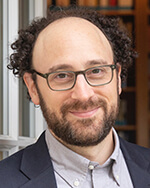
Avishay Artsy
Avishay Artsy is an audio and print journalist based in Los Angeles and a senior producer of Vox's daily news explainer podcast Today, Explained. He also hosted and produced the podcast Works In Progress at the UCLA School of the Arts and Architecture, and produced Design and Architecture at KCRW. His writing has appeared in the Jewish Journal, The Forward,Tablet, JTA, and other publications and news outlets. His audio stories have appeared on NPR's Marketplace, KQED's The California Report, WHYY's The Pulse, PRI's The World, Studio 360 and other outlets. He is also an adjunct professor at the USC Annenberg School for Communication and Journalism.





.jpg?sfvrsn=ef20b78b_0 "Avishay-Artsy")